D&D & Me (part 1)

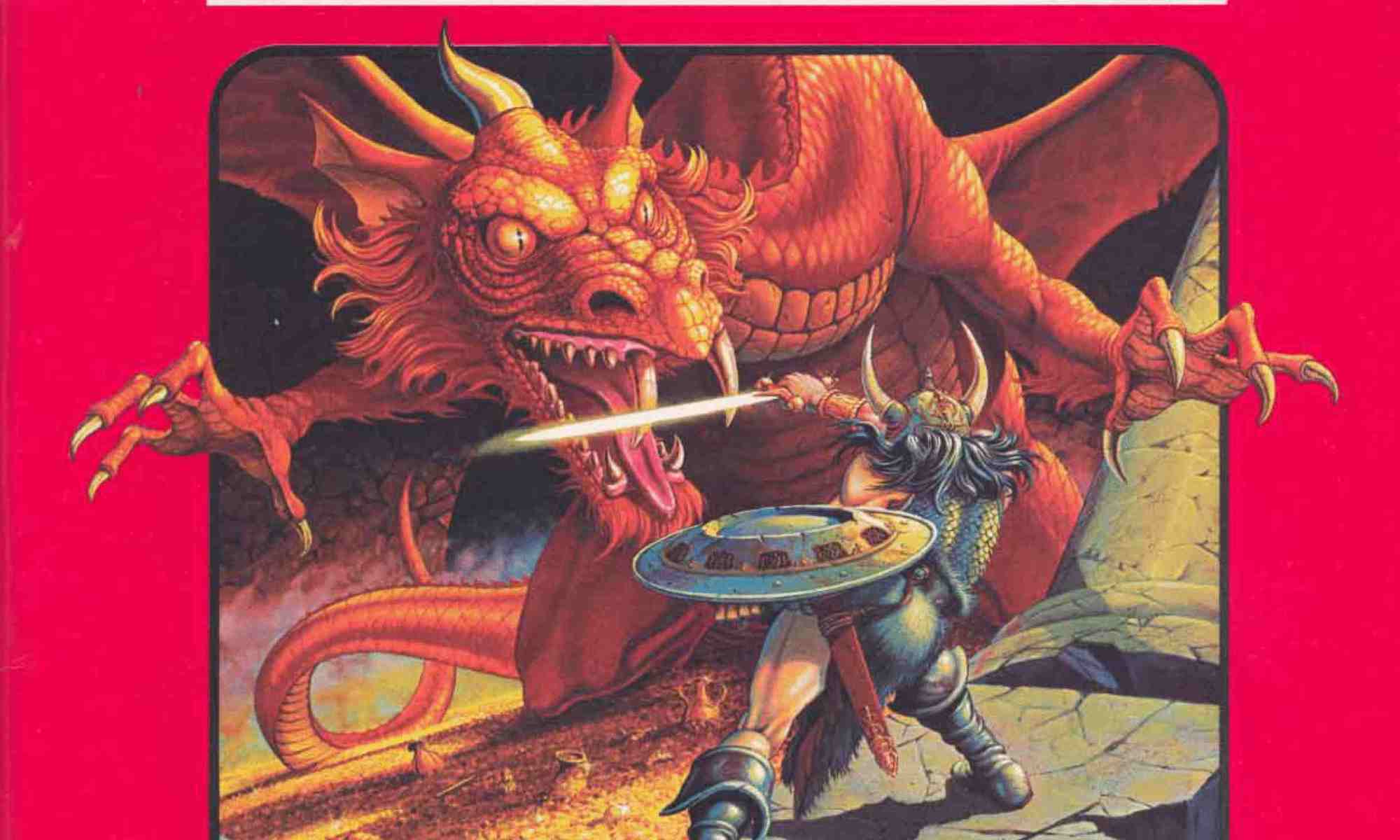
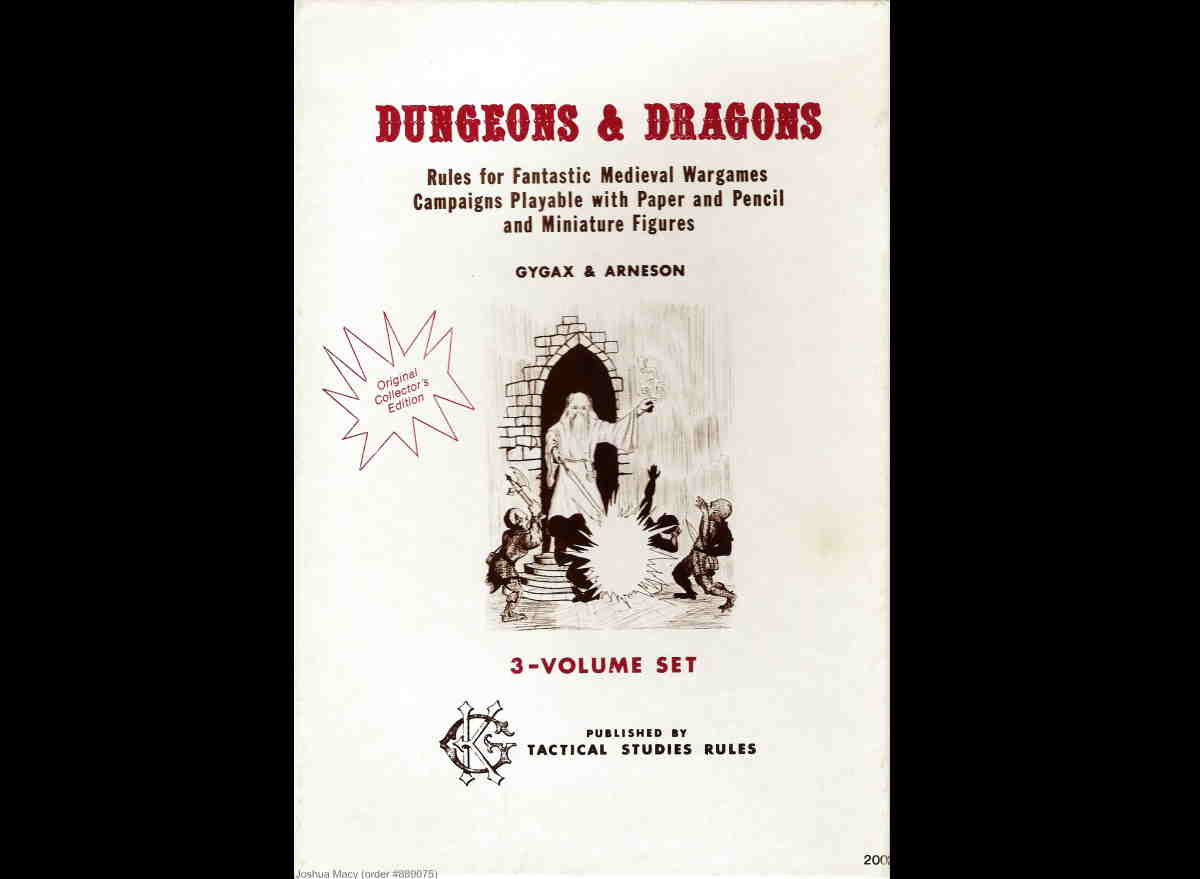
Back in 1975 my father took me to The Games People Play in Cambridge, Massachusetts, and bought me a copy of the new game Dungeons and Dragons, which he had read about somewhere (I think in some science fiction magazine). That gift literally changed my life. Hardly a day has gone by since then when I haven’t read, written, or done something to do with RPGs. All of my closest friends, save one, are people I met doing RPGs, and almost all them I still game with at least semi-regularly.

My first game group was my 6th grade friends, none of whom had ever even heard of the game, and a teacher I roped into running an after-school club for us to play D&D. I played D&D almost every chance I got, and when I wasn’t playing I was making dungeons, doodling monsters, or reading fiction that would work its way back into the game. I remember actually running a fairly longish campaign in High School set in Xanth, based on the first two books. The girls in our group1 liked that better than the previous Arduin Grimoire-based campaign; I’m not sure whether it was because it was more whimsical or they just liked having what were in effect super-powers instead of magic spells.

In the beginning I was the only DM in our group, but my step-brother started to DM as well, and we played a lot of two person games with one or the other of us as DM and the other as a lone PC, possibly with retainers; it never seemed to occur to us that one person could run more than one PC and having a party would make things such as recovering the bodies of fallen adventurers easier. We never worried much about lethality, because resurrection was easy in our games. In my Arduin game, it was something that the inn-keeper at the home base could do for you; granted, influenced by the over-the-topness of some of the Arduin random encounter charts the inn-keeper was a Platinum Dragon, whose human form was a 70+ level “techno.” We made all of our own dungeons and setting materials; I never actually even purchased any of the classic adventure modules, although I did get the Judge’s Guild City-State of the Invincible Overlord and my step-brother used it pretty heavily for a while before making his own cities and overland maps. We heavily modded the combat and magic systems, borrowing from Steve Jackson’s Melee and Wizard tactical fantasy arena combat games.

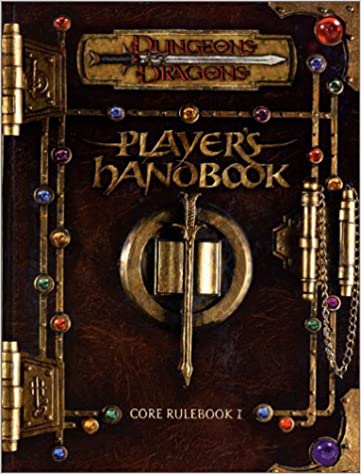
Actually, though, I moved on from D&D pretty quickly, both through D&D-likes such as Empire of the Petal Throne, and Arduin Grimoire, and also outward to different takes and genres: Chivalry and Sorcery, Runequest, Traveller (lots and lots of Traveller), Villains and Vigilantes, Metamorphosis Alpha, Gamma World, The Fantasy Trip… if it was an RPG of the era, I probably tried it. By the time the Advanced Dungeons & Dragons Players Handbook came out in 1978 I mostly thought of myself as an ex-D&D player. It had been fun at the time, but it was too limited and clunky. There were so many better, more coherent, and “realistic”2 systems out there. It chapped my hide that to the general public they were all “D&D.”

My complaints about D&D were the usual ones: what’s a hit point, anyway? How can one person have so many multiples of how much another person has? In what world is a cat a deadly threat to a wizard? Class restrictions are so pointless, and invalidate so many good character concepts. Balancing wizards by making them nearly useless at low levels and god-like at high levels doesn’t actually accomplish anything useful when it comes to day-to-day play. How does armor make you harder to hit, shouldn’t it just reduce the damage? How can people possibly be moving so slowly both in and out of combat?

I kept trying new systems, but eventually most of my gaming moved to various home-brews of my own devising that–mostly by design–rejected most of the features of D&D. It would be a long time before I played D&D again. But that’s a story for Part 2.

1- We had girls in our groups, even from the earliest years. The stereotype of D&D being something that was only played by boys never matched my experience.

2- Yes, I used to value realism, or at verisimilitude, in RPGs very highly, while having a pretty narrow view of what counted. But I’m much better now.

House Rules Swiped from DCC

In my last post I mentioned playing OD&D using Dan Collins’ Original Edition Delta plus some house rules that I swiped from DCC because I feel they’re essential. Commenter tipsta asks which ones and why.

  • Luck replaces Wisdom. Clerics don’t exist as a class (as per OED), which makes Wisdom a dead stat except for things that I really don’t favor rolling for (“insight checks” as modern editions would have it). Replace it with Luck and everything is golden.
    Why?
    • Allowing players to spend Luck from their very limited supply gives them some say in what rolls are really, really important to them, and somewhat mitigates the fact (mentioned before on this blog) that streaks of unlucky rolls can make a competent character seem like a yutz because every time we see them perform we see them fail.
    • Rolling against Luck or having things that hit a random party member hit whoever has the lowest Luck is a dead simple mechanic that covers a lot of things that come up during adventures that need some kind of decision procedure, and adds flavor.
  • Rolling the Body Roll under Luck after a combat to see if your character thought dead miraculously survived, but permanently reduce Con by 1.
    Why?
    It’s a great rule for making D&D a tiny bit less lethal. OED has a roughly equivalent Save vs. Death at 0 HP, and white box had a %chance to survive (survive what? It never said) attached to high Con scores. 5e’s Death Checks are maybe more tense, but they’re not self-limiting the way Rolling the Body is: eventually if they keep rolling your body you’re going to run out of Con.
  • Halfling Luck. Halflings get to spend luck on other people’s rolls or themselves and recover level in Luck per day. When Halflings spend luck they get 2 points for every point spent (Halfling Thieves rolling luck dice instead, as normal).
    Why?
    Differentiates them more from Elves and Dwarves, in a way that really feels like the source material.
  • Mighty Deeds for Fighters. Fighters can attempt a Mighty Deed of Arms by declaring what kind of combat stunt or maneuver they’re attempting (such as knocking a foe down or back, blinding them, disarming them, tumbling between their legs, etc.) They forgo their normal Attack Bonus based on level and roll a Deed Die which gets used as the bonus instead; in addition if the deed die shows 3+ and the attack hit the DM rules on how effective the maneuver was based on how much it exceeds 3. E.g. A blinding attack that rolls a 3 on the Deed Die might get blood in their eyes and give them a -2 next round, while a 7+ might force them to Save vs. Paralysis or be blinded permanently.
    Why?
    Gary Gygax, with his “fast and furious” one-minute combat rounds didn’t see any need for anything more than the DM adjudicating attempts to do combat stunts like knock somebody down, blind them with your torch, or what-have-you, while later editions piled on rules and maneuvers for special cases. The Deed Die solves all that with a universal mechanic for off-the-wall stunts that still leaves enough room for DM interpretation to keep it from becoming some kind of story-game narrative push. I also allow non-Fighters to use a Deed Die, but theirs is always a d6 with success on a 6, instead of the Fighter’s growing Deed Die with success on a 3+.
  • Luck Die for Thieves. As per DCC Thieves cans add their Luck Die to any of their rolls by spending a point of Luck, which they recover 1 point per level per night.
    Why?
    Thieves skills suck, and always have. Except for climbing, all of their signature skills start at around a 1 in 6 chance to succeed rising all the way to a 3 in 4 chance at 9th level. Even if you interpret it Philotomy-style as being an extraordinary ability (anybody can hide, thieves can hide in shadows!) for most of the Thief’s career they are going to fail at most things they attempt. OED makes rolling to fail not require looking up anything on a chart, but doesn’t change the probabilities (which, admittedly, is kind of the point of how Dan derived the rules). As soon as you add Luck Dice and Luck regeneration to Thieves they probably *can* succeed in the clutch, when lives or fortunes are on the line… but only a few times a day. In a game where a first level Wizard can have an encounter-winning spell like Sleep once a day at first level, being able to probably guarantee success roughly as often for picking a lock or moving silently is only fair.
  • Re-Casting Spent Spells Through Spellburn. Same as DCC rules, it’s a point of Spellburn (a point off of either Con, Str, or Dex) per level of spell… plus to succeed they’ll have to roll a check d20+Int Bonus+Caster Level-Spell Level against Target 20. The Spellburn has to be done each time you want to cast a spell you’ve already use up for the day. Attribute points recover at the same rate as Hit Points, which in OED is level per week of rest and relaxation in comfortable surroundings.
    Why?
    The single thing that players have complained most about in all the time I’ve been playing D&D, going all the way back to 1975, is the limited number of spells per day at low levels. A couple of times per day, the wizard gets to be a wizard, the rest of the time he can cower behind everybody and toss daggers. This is one of the first things that used to get replaced with some sort of spell-point system with many fewer spells known but some pool of points limiting how many times they can be cast, or in modern editions “cantrips” that are roughly equivalent to throwing a dagger but can be cast infinitely. The thing is I like the strategic aspect of the Magic User having to decide which spells to equip each day; I think it adds a lot to the game. I also think that encouraging players to use a variety of spells, rather than to save all their spell points/slots to cast their single best spell (usually Sleep at low levels) is an important consideration. Keeping the Vancian casting limits, but including the DCC “out” that you’re never completely out of spells as a wizard as long as you’re prepared to sacrifice something valuable gives you the best of both worlds.
  • Dwarves can smell gold, and Elves are allergic to iron.
    Why?
    The RP aspects of both of these are just too much fun to do without.

The Fallen Lands

I’ve created an Obsidian Portal site for my online Fallen Lands campaign. My Sunday group has actually switched to doing 5e Phandelver on Roll20 during the quarantine, but I fell in with a new group that was playing OD&D and they expressed interest in playing a second night a week with me refereeing. People have a lot of time on their hands thanks to the pandemic.

So far we’re three sessions in, with the next session scheduled for tomorrow, (Wednesday the 26th of August, 2020). I’m using Dan Collin’s Original Edition Delta house rules, which smooths out some of the rough bits of the white box edition, plus some house rules of my own, mostly swiped from the bits Dungeon Crawl Classics that I can’t really do without any more.

It seems to be going well, and it’s a real pleasure to run compared to some of the later, fancier editions. Even 5e, which does away with a lot of the cruft, and with support of some excellent tools in Roll20, feels like heavy lifting compared to OED. But more on that later.

It’s Marvelous!

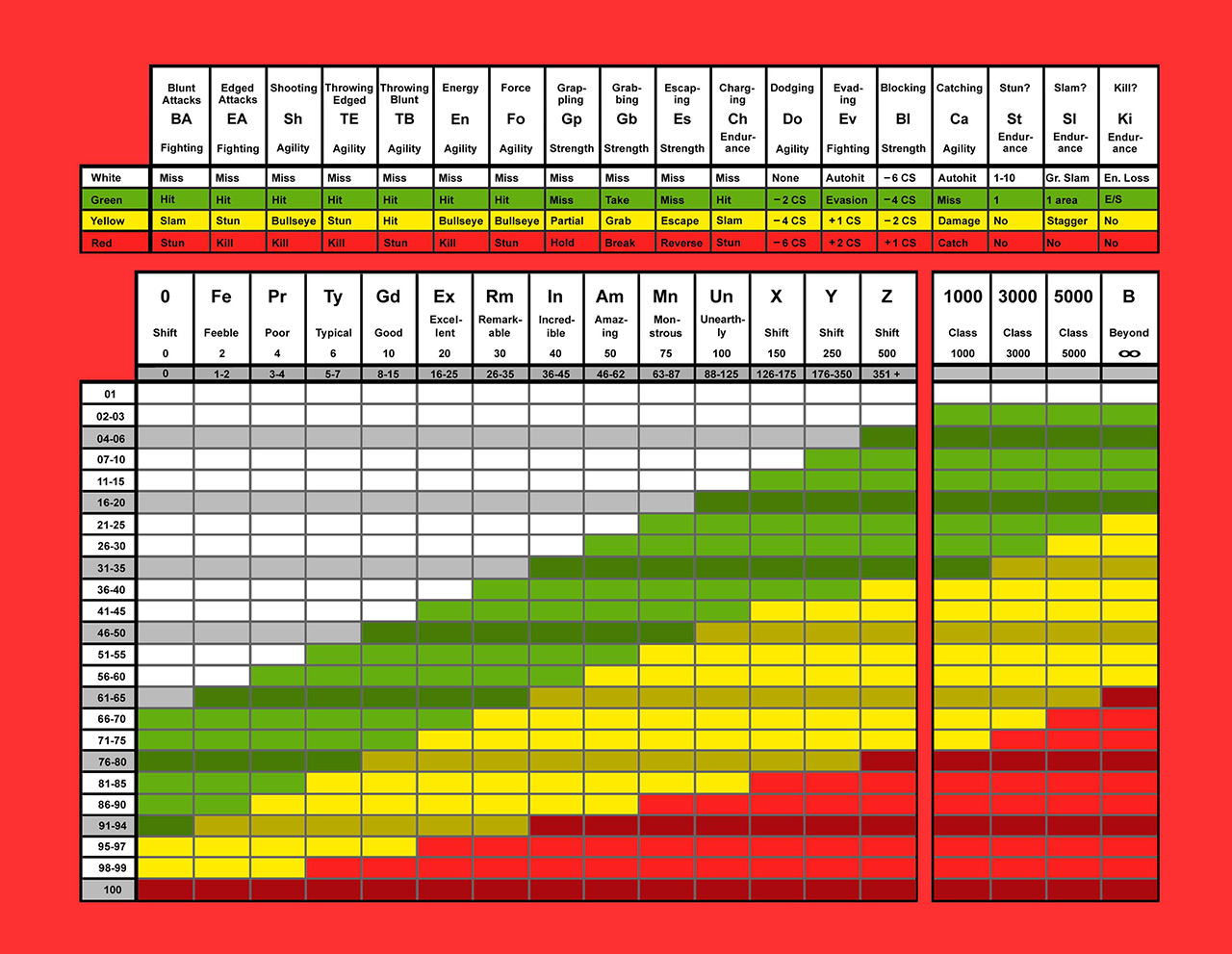
A while back I wrote a web page to help play Marvel Super Heroes, by automating the roll on the “Universal Power Chart” to show you exactly what cell and color your percentile roll lands in based on the Power Level Column (the old Feeble, Poor, Typical, Good, Remarkable, Incredible, Amazing, etc. rating that MSH gave character’s powers). I don’t think it actually got much use, because it does require that you have a browser open when you play… but that was before plague stalked the land like some great stalking thing. Now that folks are doing most of their gaming online, it might be a bit more useful

Marvel FASERIP Universal Power Chart

I’ve moved it to github, since Google is closing down the classic Google Sites where I used to host it.

Oh, and if you have never played it before and want to get into it, you can check out the Classic Marvel Forever website.

Excelsior!

Torches & Lanterns

A while back Dyson of Dyson Logos drew up a couple of nifty images to use to track torch and lantern use in B/X D&D, where torches burn for 6 turns and lanterns burn for 24. That was back in the world before, when people could actually gather face-to-face to play. In order to make this a little more friendly for online play, I’ve turned the images into a pair of PDF forms where you can check off each turn as you go. They’re free for personal use, derived from Dyson’s images which themselves are free for personal use.

Torch Card PDF
Torch Card
Lantern Card PDF
Lantern Card

D&D Castle Inhabitants

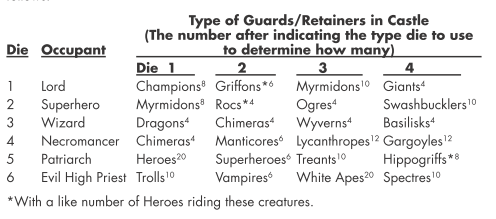
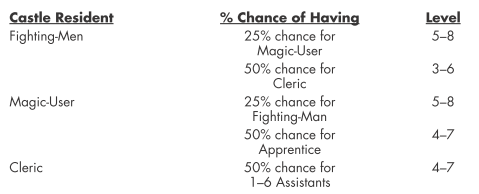
Since I can’t use a multi-step table without wanting to automate it here’s a Inspiration Pad Pro table I wrote to generate the inhabitants of a castle, according to the charts in Original D&D LBBs.  They looked like this:

OD&DCastleInhabitantsOD&DCastleInhabitants2

Additionally, castles would have 30-180 guards, split 50-50 between Light Foot armed with crossbows and Heavy Foot.

Personally, I think the picture of the world they paint is pretty amazing… far more unusual than the “vanilla fantasy” that D&D is often accused of being.  I’m really looking forward to my players interacting with this in the future.

The generator file is on the NBos Software site.  Example output:

Patriarch, with 6 Superheroes, 70 guards
Evil High Priest, with 10 Spectres, 130 guards , Assistant (level 6)
Evil High Priest, with 5 Spectres, 140 guards , Assistant (level 6), Assistant (level 4)
Lord, with 3 Giants, 120 guards , Cleric (level 3)
Lord, with 3 Myrmidons, 140 guards
Evil High Priest, with 10 White Apes, 90 guards , Assistant (level 6), Assistant (level 6), Assistant (level 6), Assistant (level 7), Assistant (level 6)
Patriarch, with 6 Superheroes, 60 guards
Wizard, with 1 Wyverns, 100 guards , Fighting Man (level 7) , Apprentice (level 7)
Lord, with 5 Myrmidons, 110 guards , Cleric (level 4)
Superhero, with 9 Swashbucklers, 110 guards

Infravision

I was just watching a whole discussion that Dan “Delta” Collins and Paul Siegel were having on their Wandering DMs YouTube channel all about Infravision, and just when I was going to leave a comment about how I would rule it, they came to my preferred solution: treat it like thermal imaging.

Basically, if you’re going back to the beginning when Elves and Dwarves had “infravision” and not “dark vision” or “low light” vision, the question is what exactly can they see, and how far. Can they see details?  Colors?  Is the ability washed out by torches? The LBBs are actually silent on the whole matter, while Chainmail says Dwarves and Elves “can see in normal darkness as if it were light”.  Interestingly, so can Wizards (in OD&D that must be the purpose of the Infravision spell).  Greyhawk specifies that Dwarves can see monsters up to 60′ away in the dark.

I’m not 100% sure of how we ran it back in the day, when we didn’t even have Chainmail but did get Greyhawk shortly after it showed up in the local game store.  As best as I can recall, though, we took the “see monsters” and “infravision” description pretty seriously, treating it as the ability to see heat.  That meant no ability to discern anything that wasn’t hot: no stone walls, doors, statues, traps… if it wasn’t warmer than the surroundings it just wasn’t visible without a light source.

Interestingly, I don’t think we arrived at that because of concerns of the distances lanterns and torches worked vs. the 60′ for infravision, because we mostly didn’t track light sources and the like.  It was too finicky for us, we just wanted to kick down doors and kill monsters and take their stuff.  Maybe there was an occasional trap or something that  dunked you in water and doused your torch, but I just don’t recall much if any discussion of how far down a corridor you could see…but I do recall discussions of things like whether zombies were room temperature or not.

The only thing I think I would do differently now is I’d probably let Dwarves and Elves operate in “ordinary darkness”, that is to say outdoors at night, as if it were daylight as per the Chainmail rules.   It’s only in dungeons and caverns where you have near total darkness,with barely a stray photon, that I’d be more strict about the limits of infravision. And I think that Paul has a good point in the video, that you don’t want characters able to see up to 60′ in a dungeon with perfect clarity: most published dungeon maps are drawn to a scale where seeing that far spoils all the surprise about what’s down at the end of the corridor, or lurking in the far side of a big room.  On the other hand, being able to see if there’s a living creature down there, but nothing about its surrounding or maybe even what it is… that’s giving the players options while keeping things still a bit spooky and mysterious.

Having infravision washed out by nearby heat sources like torches, as in later editions of D&D, strikes me as more trouble than it’s worth, particularly if you’re limiting it to only what infravision as thermal imaging would show.

One bit that I  don’t recall seeing much online discussion of, and that Dan and Paul didn’t touch on, is that it’s clear from Book III of the LBB that “Monsters are assumed to have permanent infravision as long as they are not serving some character.”  I recall somebody somewhere pointing to that as evidence of the “Mythic Underworld” nature of dungeons, and I may run with that for my End Times campaign.  Or I may forget about it  as just another thing that’s too fiddly to worry about.

Original Edition Delta Plus DCC

As much as I’m looking forward to getting back to the stark simplicity of OD&D (as streamlined and simplified by Original Edition Delta) there are certain rules from Dungeon Crawl Classics that I’m unwilling to do without because they fix what seems to me to be genuine problems with OD&D (at least for me and my players).

  1. Mighty Deeds for Fighters. The DCC Mighty Deeds rule just makes Fighting Men more fun to play, and really makes up for the relative lack of options that FM get as they level up and the other classes get more and better abilities.  More than that, it gives me as Dungeon Master and simple and consistent way of adjudicating all the crazy shenanigans that Fighting Men ought to be getting up to: tripping, disarming, swinging from chandeliers, throwing sand in the face of the foe, etc. Of course I can make rulings on the fly, but I appreciate having a rough framework to help.  Gygax, et. al. had an actuarial approach to combat: as long as over hundreds of rolls the statistics worked out, who cares what happens moment by moment in a combat round.  Only everybody I play with regularly, that’s who.  Even back in the 70’s we never really paid attention to the “fast and furious” one minute combat rounds.
  2. Luck instead of Wisdom.  Since OED removes Clerics, and I agree with the reasons for doing that, it leaves Wisdom as a dead stat.  Luck is better for a pulpy game, and the ability to spend Luck when you really need to succeed, coupled with the sure knowledge that your Luck is running out when you do that does great things for the game, IMO.  It also helps with the the problem I sometimes perceive of an allegedly competent character getting a few unlucky rolls and coming across as a useless twerp; yes, in the long run the probabilities will prevail, but in a game with a decent dose of lethality we may all be dead before the long run. I’m not usually a fan of “meta” game currencies like Hero points and the like, but Luck is different… characters like Fafhrd and the Gray Mouser worry about their luck in a way that makes more sense with Luck as a spendable resource than just what you get from rolls of the dice.
  3. Luck Die for Thieves. as per DCC Thieves cans add their Luck Die to any of their rolls by spending a point of Luck, which they recover 1 point per level per night. Thieves in OD&D suck, and OED just simplifies the math around that.  I know all the apologetics for really low chances of success at anything except climbing (not even reaching 50-50 chances until nearly name level), and probably have written a few myself.  The fact remains that, except for climbing, you’d be better off playing a Fighting Man or Magic User that sneaks around and steals stuff.  The Luck Die fixes all that.  Even with your terrible starting probabilities, if you spend Luck you can make it count when it’s important.
  4. Recovering Spells Through Spellburn. I’m not going whole hog into the DCC spell charts, because as great as I think they are, some of my players seem to really resent the randomness.  So we’ll be using the clearly defined OED Book of Spells and the usual spells per day charts, but since I think that oh, you’re out of spells, you can just throw daggers is and always was lame, while the 5e solution of endless cantrips makes the game feel like a JRPG setting I’m going to let Wizards attempt to cast an already expended spell via Spellburning. Same as DCC rules, it’s a point of Spellburn per level of spell… plus to succeed they’ll have to roll a check against DC 11+ spell level. The points of Spellburn to recover the spell won’t add to the roll, but I’ll probably let them burn more to try to make sure that the spell actually goes off. I’m definitely going to make them roll on the creepy Spellburn actions chart instead of just ticking off the points of STR, DEX or CON.
  5. Rolling the Body. Instead of death at zero HP or Delta’s rule allowing a Death Save, just roll the body after combat per DCC: roll less than your remaining Luck and you miraculously survived… you haven’t burned all your Luck, have you?  Heh. Heh.  The loss of a point from a random physical attribute will keep this from being a permanent “Get Out of Death Free” card even for players who hoard their Luck.
  6. Crits and Fumbles from DCC. I like Delta’s rule about being able to save against crits and fumbles, as well as 1 HD or less creatures not generating crits, but the Good Hits and Bad Misses chart from the Dragon magazine that he uses strikes me as both too bland and too punishing.  I think I prefer the DCC charts as well as the way that Fighters’ crits are better than other classes and improve with level.  I think I’m also going to keep DCC’s rule that Thieves crit on back-stab, too, instead of just boring old double damage; the victim will still get a save as per Delta.
  7. Dwarves can smell gold, and Elves are allergic to iron. Those are just too much fun in RP terms to part with.  Magic armor and weapons won’t pose a problem to elves, that would be too cruel, but they better stick to leather and weapons like bows and spears or try to find some mithril until they can get magic. I note that in OD&D encounters in the wild, bands of Elves have AC 5, which implies either chain without a shield or (more likely at least in this setting) Leather, Shield and a +1 from DEX.

These Are the End Times

The world has ended. The great kingdoms have fallen, and their cities lie in ruins. Far to the north the forces of Law clashed against the forces of Chaos, and were defeated. But in their moment of triumph the armies of the invading barbarian hordes overreached, and lost control of the dark powers that had carried them to victory, unleashing a magical corruption that consumed them as well as their enemies. Now the pitiful remnants of the armies of Law straggle back to their homelands, through monster-haunted wilderness, past ruined and abandoned villages. The PCs are among them, searching for means to survive, whether that is wealth, power, or just a safe harbor.

This was more or less the intro I gave my group to our new D&D campaign. I wanted to really take the game back to its roots, 1974-style, but hopefully with the advantage of what I’ve learned since I was ten. We’re using Original Edition Delta, which is a set of house rules by Dan Collins that streamline and clarify the little tan books. Onto that I’m bolting a couple of rules from DCC that I think really fix problems that my players and I have with the  oldest version of the game (more on that later). I want to lean heavily into the insights of Wayne Rossi’s The Original OD&D Setting, namely that the wilderness rules and encounter charts are more in keeping with a post-apocalyptic setting than any sort of semi-realistic medieval or even pre-D&D fantasy fiction setting. The population densities and size of the marauding bandit bands and prevalence of horrible monsters don’t make sense in a well -settled area with stable government and regularly-traveled trade routes. But in a post-apocalyptic anarchy…

I also wanted to try a setting where the status quo was terrible, and there was nobody around to do anything about it except the PCs. Maybe they’d try and maybe they wouldn’t, and either way would be fine…but if they don’t, there is no king’s army or great wizard who’s going to clean it up instead. I have a strong tendency to run settings where the government is basically benevolent, and things are largely peaceful, so I wanted to try breaking sweat from that default, just to see how it goes.

I’m really excited about where this could go. I’m using Delta’s rule for starting the PCs at third level to bypass some of the initial grind that my players have had enough of in our DCC funnels. Initial play is going to be dungeon-centric, because Dungeons & Dragons after all, but I’m hoping they’ll stick with it to name level and maybe try settling the wilderness and pushing back against the tide of Chaos with “domain game” play.

Role for Initiative!

David “noisms” McGrogan has an interesting post on his Monsters and Manuals blog on initiative and some ways you might simulate it in RPGs. After some discussion of what initiative is and some examples from history, he proposes something along these lines:

Initiative
When one side is surprised and the other is not, the side that is not surprised has initiative for the entire encounter.
Otherwise, roll a d6 to determine which side has initiative for the entire encounter.
A side which “has initiative” acts first.
A side which does not have initiative can attempt to “wrest” it from the other. The method for doing so is as follows:
The player (or DM if acting for NPCs) announces his character is attempting to wrest the initiative by either carrying out an attack or – at the DM’s discretion – performing a difficult task. He declares his intended action in the ordinary way at the start of the round. If he succeeds in hitting his target or performing the declared task, he wrests initiative and his side has initiative from the next round onwards. If he fails, in the next round he cannot act at all because of loss of focus.

So, it’s not a bad way to simulate the flow of initiative in battle at all…but I think simulating initiative in battle is like simulating solving a puzzle.  Yes, you could absolutely give them a roll against a stat or skill to see if they solve the puzzle, and that would kind of feel like what happens when somebody solves a puzzle… except it takes the fun out of it.

Backtracking a bit to the start of his post describing initiative: “Suddenly, it seems as though one side gains the capacity to act, while the other can only react.”  That’s exactly it: initiative belongs to the side that’s taking actions which the opponent must react to, or suffer the consequences.  So the real way to seize initiative is not to declare “Attempting to seize initiative” but to come up with (or luck into) a course of action that leaves the enemy no real choice but try and stop it.   Attempt to flank them, cut off their retreat, disrupt their supply lines, target their leaders or their sacred banners, stampede their draft animals, free the prisoners, force them to react.

The real job of the DM in this isn’t to decide whether the task is difficult enough to justify changing the initiative, but to play the enemy side as something other than a bunch of automatons going about their programmed tasks.  Actually try to weigh how much trouble it would be for them if the PC’s ploy succeeds and what would they risk to head it off.   Think about the ways they might try to seize the initiative from the PCs along the same lines, modified by how savvy they ought to be at warfare.  Make the players come up with tactics and strategies to seize the initiative and hold on to it. You don’t even need to declare which side “officially” has the initiative: it becomes evident through play which side is acting and which is reacting.  The side that’s going first according to the standard “Initiative” roll might still be stuck reacting if they’re busy preventing a flanking maneuver or stabilizing somebody who got hurt from a previous round.

Standard D&D has a few mechanics to help with this,  primarily morale and the list of things that automatically cause morale checks (first friendly death, leader death, more than half the forces now dead or disabled).  Failing a morale check should definitely cost you the initiative… and don’t forget to check the morale of the PC’s hirelings and retainers.  Actually tracking ammunition and expendables like light sources (or faking it with “exhaustion rolls”) contributes as well: if the archers are running low on arrows or the spell-casters on spells… Gaining surprise or going first certainly gives that side first crack at putting their opponents on their back foot, but such opportunities are easily squandered.  A few bad/good rolls and suddenly a morale-check condition is met or they just get too busy not losing to spare actions that put the enemy in a bind.

Now, I realize that there may be times, particularly to the observer, when it’s not at all clear what exactly is causing the enemy to act as if they were stuck in reaction mode, some of it may be psychological more than practical after all. It might be tempting to go with formalized initiative rules to try to capture that… but I feel that most of the time the best way to simulate psychological factors is with real people’s psychology.  Let the players decide whether they need to react to the latest enemy actions or they can drive forward their own plans; as DM decide the same way, unless you think you’ll have trouble being fair given how much better view of the state of the battle you’d have versus the commanders you’re controlling.  Then maybe you could throw in an informal morale roll or int check or something, but I’d resist the urge to create a hard-and-fast rule.

So that’s my take on initiative: play as if it mattered, but don’t try to formalize it into a set of rules. IOW: Role and not Roll. There’s a lot in gaming that I think works best that way.