Superheroes, not Superbowl

Lat night we ran another session of Kapow!, my superheroes rpg that we’re playtesting, and I take it as a good sign that despite the fact that before we started a couple of our players expressed interest in watching the Superbowl half-time show, once we got going they forgot all about it.  We had our first big set-piece battle, and it went really well I think.  Everybody was engaged and involved, and despite the fact that it went for most of the session it felt fairly fast-paced and like they got a good amount done.  They were facing off against the big boss and her 64 minions, so the fact we managed to wrap it up at all is good.

The group had tracked Alexandra LeGrande to a warehouse where she was training her army of Glammazons, and scouted it out to find a secret lab underneath.  They decided to split their forces, with Harbinger (intangible scout) and Public Defender (Force Fields) sneaking in through the storm drains to confront and delay LeGrande, while Namaste (super-yogini), Akela (jungle girl), the Wraith (power-draining mystery man), and Redline (powered-armor/motorcycle multi-form) burst into the warehouse above to round up the Glammazons and prevent them from just running off.

The fight between LeGrande and Harbinger and Public Defender went particularly well, from my point of view. Once she revealed her supervillain persona,  Olympia, and began chucking her pentathalon-themed weaponry (exploding discus, “switch-blade” javelins, and big old hammer) it became evident that one or two on one they were just no match for her.  She KO’ed Public Defender in the first round, which really bummed him out until I reminded him that by the rules he’d be out for a maximum of three rounds or until one of his teammates revived him, whichever came first.   Harbinger then spent his turn reviving him, which meant that he couldn’t stay phased, but managed to avoid her attack anyway and they were both back in action.

Upstairs the fight went pretty much as expected, with the heroes easily clobbering multiple Glammazons per round, though the Glammazons did manage to at least hinder them, and in one case managed to pile on enough to score as a knock-out on Akela…but her jaguar Nushka was able to revive her easily enough.  The Wraith’s exotic power-drain power proved to be the most effective at dispatching large numbers of agents quickly, though Namaste was no slouch in that department either, just using her strength and acrobatics.  Akela’s heightened senses allowed her to detect that the group below were having trouble, so she, Redline and Namaste headed down to the lab, leaving the Wraith to deal with the remaining Glammazons.

Once the full group (more or less) was assembled, they managed to combine their powers and take Olympia down, though she did get a good shot in, disabling Redline’s Super Strength with a javelin through his suit’s shoulders.  Basically it worked exactly as designed: a boss significantly tougher than any individual was defeated by the heroes using team-work in a straight slug-fest, and once they had cleared the decks and gotten together it went only two rounds…no slow war of attrition in Kapow!  It could also have easily gone the other way, I think; if she had been able to take one or two out and press the attack so the group couldn’t afford the time to revive them they wouldn’t have had the numbers needed to overcome her higher defense and she might have been able to defeat them all and capture them or escape.

It was also very gratifying that Wendy at least thought the villain was really cool, and seems to be looking forward to her escaping custody and facing them again some time in the future.  Don’t worry, Wendy, you haven’t seen the last of Olympia!

It’s An Honor Just to be Nominated

The Core Mechanic: 375 Blog Post Nominations to Open Game Table!
Tales of the Rambling Bumblers has five posts nominated:

Thanks to whoever nominated them. It really is an honor when somebody goes to the trouble of singling out even one of my posts as being worth people’s time to read. I really wasn’t expecting as many as five.

RPG Combat and Concentration of Fire

Whitehall Paraindustries: Freedom From Hitpoints, Part II

There’s a serious problem with this approach however- if you attempt to use any system that resolves combat as a matter of attrition, you will bring Single Target Focus into being.

That’s the core problem with attrition, it means that you can only win by slowly removing a resource of your opponent- and that means the best way to win is to focus all your methods of resource removal on one target until it’s gone

See, I think Single Target Focus is realistic. I would argue that throughout history a big chunk of tactics boils down to the offense trying to get multiple attackers on a defender and the defense trying to prevent that from happening. Concentrating fire works, whether it’s Greek hoplites wielding pikes so anyone approaching had to deal with two or three spears at once, to  phalanxes trying extend their fronts or position themselves to outflank each other at the corners, to a wedge of cavalry charging a thin place in the line, to fighter jets maneuvering two-on-one in a dogfight. To the extent you want to spread attacks around, it’s to cover all the foes so they can’t do that, not because you can make good progress simultaneously everywhere.

Where a lot of RPG combat seems to me to be unrealistic in this respect is that players have supernaturally effective Command, Control, and Communications so they can always perfectly coordinate concentrating their fire, picking optimal targets based on how wounded they appear, switching targets as soon as they’ve downed a foe with no wasted effort, as if the players were a hive-mind. Early D&D dealt with this by having much more war-game-like rules for things like having to declare all your targets before any combat resolution, hard-and-fast zones of control so you couldn’t bypass enemy units, absolutely forbidding archery fire into melee or at point-blank range, strict resolution of the order of attacks so that all movement happened before any archery fire before any melee was resolved, making it difficult or impossible to disengage, and so on.  Under these conditions, you were encouraged to balance concentration of fire against the chance of wasting attacks and the requirements and limitations of maneuvering.

There are “fixes” that you can make to encourage combatants to spread their attacks around, such as the ones Brian discusses in his post, e.g. a “Death Spiral” so that you can severely degrade somebody’s combat effectiveness well before you can eliminate them which encourages you to do that to as many foes as you can before you settle down to actually defeating them (Savage Worlds has something like this, with a Shaken result being sufficient to keep them from attacking while being a lot easier to achieve than eliminating them completely), but it’s not clear you really want to do that.  Besides sometimes introducing their own problems, they strike me as addressing the symptom instead of the cause.  You can encourage players to spread their attacks around instead of concentrating their fire, but they’re still going to be coordinating their actions with uncanny precision which to me is the real thing that makes the combat feel more like a game than a chaotic battle.

Mostly I live with it, because the cost of fixing the command and control issues seems to me to be too high in terms of limiting the players’ spontaneity, and my players (with perhaps one exception) are emphatically not interested in anything that resembles miniatures war-gaming.  I sometimes rein in the table-talk to prevent them from spending excessive time coordinating what should be split-second decisions, but mostly allow them to fight like a well-oiled machine.

Nominations for Open Game Table Vol 2. Now Being Accepted

Per Jonathan Jacobs, he’s starting to accept nominations for posts to be included in the second Open Game Table anthology of RPG blog posts.
The submission deadline for nominations of blog posts closes January 15th, 2010. I’ve streamlined the submission process so that all you need to is submit a valid URL. Up to 5 per submission form can be accomodated; but there’s no limit to how many you can send in. The nomination form, and more information, can be found here
I’d be honored if anyone wanted to nominate some of my posts.  Some of the more popular posts are listed to the right, under Notable Posts (the one on Sandbox Play was included in the first volume), but of course I encourage everyone to poke around in the archives.  Actually, I encourage everyone to poke around in the archives whether they want to submit something or not.

Clobberin’ Time: Kapow! Playtest

We had our first real (in the sense of using the rules and rolling dice) session playtesting my Kapow! Superhero RPG, and I’d say it went pretty well.  We had one short combat, where the gang–who have decided to call themselves The Beacon City Brawlers–took out a dozen thugs armed with pistols and shotguns who were robbing a diamond exchange with startling ease.  Startling to them, that is…one thing I was hoping to get out of the combat was to teach them how much more powerful they were than normals.  We generally play in much, much lower power settings, so I think they found it gratifying when they realized that bullets really couldn’t hurt them.

The combat out of the way, we moved to the meat of the session, with them investigating a bank robbery by a group of masked, super-strong and fast women the press had dubbed “Barbie-zons”.  The players got to invoke various of their shticks, with Jungle Gal scouting the bank with her heightened senses, The Wraith using his contacts to acquire the surveillance tapes, Redline using the Crime Lab in the base to analyze the tapes with facial analysis software, and even Namaste getting into using her knowledge of yoga and anatomy to analyze the way that they moved.

One thing that I realized in GMing is that even though I made up all the rules, and even wrote them down, I don’t have them all at the tip of my fingers, and the rules aren’t quite light enough for there to be only one thing to remember (e.g. roll vs. target).  I’ll need to review them a bit before I run again.  They did seem to work pretty much as I had hoped, to direct and resolve actions without getting in the way.  There’s definitely a tendency for the players to ask for permission to try things that’s a legacy of other games we’ve played over the years, such as questions about whether they can move and attack, or does the move take their entire action, but I can definitely see them warming to the possibilities of simply being able to say “I phase through the top of the van that’s speeding away and into the seat next to the driver” without needing to make a skill check or negotiate it with the GM.  Which reminds me, I did want to nail down the rule for over-awing somebody (along the lines of a Champions “Presence Attack”) before next session.

The session was it it was over before we knew it, and in fact we were fifteen minutes past our usual stopping time when somebody noticed and we had to wrap things up.  People seemed pretty absorbed, and into their characters, and you can see the personalities starting to emerge.  I’m really looking forward to the next session.

Death In Stonehell

The kids lost another party member in Stonehell last Friday, and almost lost a second, when all three triggered a magical trap at the same time; I maybe should have been more generous and picked one of the three at random to deal with it, rather than dealing with each of them separately. On the other hand, this way they did get the treasure… and the way they play it seems pretty likely that they would have kept trying it until all three had a turn anyway.
The one whose character died was a little upset, but got over it quickly enough when he rolled a replacement character, a Fighter with 16 Str and 15 Con.

Out-RAGE-e-ous Accents

Here’s a comment I left on an RPG Blog II post about Dwarves with Scottish Accents:

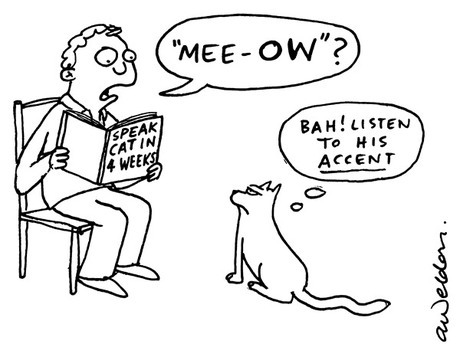
eh, it’s amusing and it passes the test for character accents: it’s easy enough for amateurs to produce recognizably. It matters not at all whether it’s authentic, only that the audience can recognize it. The fact that people know it’s inauthentic may actually be a feature: people who are much too self-conscious to attempt an accent where they might be judged against the real world seem to be comfortable with doing the over-the-top parody accents: och aye Scottish, oh I say English, ve haff vays German, I shall taunt you a second time French, bork-bork-bork Swedish, keel moose and squirrel Russian, arrr me hearties Pirate, fur shur rilly Valley Girl…

I know our group does a lot of silly voices, for which we mostly have Rachel and her Sister Theresa to blame.  I know that in addition to the ones I mentioned above Doug sometimes does Monty Burns: eeeexcellent, complete with finger steepling gestures, and a kind of well, shoot iffen that don’t beat all Hick. What ones am I missing?  There are a bunch of bad celebrity voices that I do, but I’m not sure whether they count….

British-English-AccentCartoonCat.jpgoriginal-copy-1kix8es

Kapow! Introductions

We had our first real session of Kapow! on Sunday.  Mostly the group just role-played through getting together.  Mike D’s character Redline is putting up a warehouse to serve as the group’s base, and started the ball rolling by getting in touch with the sole remaining member of the Beacon City Police Squad, Public Defender (Mike B’s character).  He figured that, even though the Police Squad had been stood down by the city after cost overruns and a disastrous mistaken battle with the world’s premier super-team, the Astralnauts, they might have some idea of where to find some supers who would be willing to form the core of a new, private team.  Public Defender ran it by Captain Carlson, who didn’t want to hear anything about it or anything that would lead to the Department being seen even remotely to be involved in forming a new team, however unofficial.  That said, he conveniently went for a cup of coffee leaving the file containing the information PD was looking for open on his desk.  From this PD gleaned the name The Wraith (Doug’s character) and set out to contact him.

Oddly, before he could do so, the Wraith (a former undercover officer with the Police Squad) showed up…the Wraith has good sources of information.  Using his myriad contacts throughout the city, the Wraith tracked down some potential recruits and persuaded them to go to the warehouse where the group’s not-so-mysterious backer would meet them.  There was a certain amount of hilarity as Doug strove to find exactly the mysterious voice he wanted to use for his character…particularly because it strayed perilously close to Montgomery Burns at times (“From time immemorial mankind has dreamt of … blotting out the sun!  Er, forming a group of do-gooders, I mean. … Eeexcellent.”)  But they all showed up anyway:

  • Redline, Mike D.  Founder of the group, paraplegic ex-motorcycle racer and inventor of the powered armor that transforms into a motorcycle; or is it a motorcycle that transforms into powered armor.
  • Akela, or Jungle Gal as she’s called by the press, and her jaguar Nushka.  Wendy was busy with Google, as you can see.
  • Namaste, the yogini, Elyssa.  Super strength, flexibility, breath control, and mental tricks, plus the power of Karmic Retribution.
  • Public Defender, Mike B, a force-field projector.  Police officer, last member of the disbanded official police superteam Police Squad.  The rest turned in their equipment, but it was built into Public Defender, so…
  • The Wraith, Doug, mystery figure in a trench-coat, with gloves that can drain super powers and stun.
  • Andrew Jackson, Dan, no super name yet.  Has-been extreme sport star with the power to phase through solid objects.

Together they form….  um, actually, the group hasn’t settled on a name yet.  I’m sure they’d be grateful for suggestions.

After their introductions, they did a little light sparring so the players could get used to the system and the characters “wouldn’t seem like a bunch of big doofuses in their first battle”, to quote Mike D.  That went pretty well, though I realized that I hadn’t fully defined how control powers work if they don’t achieve a “knock out.”  (I have since rectified this: a partial victory lets the controller command the target to perform one action, then the control lapses.)  It went pretty quickly, anyway, and I expect it will be quicker still once people get the hang of it.

Kapow! Playtest Starting

Last night we started hashing out the parameters for a supers campaign playtesting my new Kapow! Superhero RPG System.  We didn’t actually generate characters because people wanted time to mull it over, but we discussed how it worked, and settled on some things about power level and tone.  To summarize:

  • Tone: serious, but not grim.  Superheroes don’t kill, and supervillains mostly don’t either (because it’s not their MO or they’re stopped by the superheroes).  No “Joker Syndrome”–if they catch a killer, the authorities can put him away for good.  Realistic consequences of property damage such as throwing a car or getting smashed into a building aren’t generally considered, but violence isn’t sanitized to the point where fighter planes blowing up are followed by a cut-away to all the pilots floating down on their parachutes, Saturday-morning cartoon style.
  • Scope: City-wide.  The adventures will mostly take place in a single city, but range all over the city rather than be focused on a particular neighborhood.  The PCs will be major players for their home city, but there are well-known groups and supers much more powerful than they.
  • Prevalence of supers: Supers are common, and have been so for a long time.  Every city probably has at least one hero, big cities will have a hero group, huge cities might have several.  A super group can expect to fight a wide variety of villains, not the same ones over and over. There’s a wide spread of power-levels, and many who have powers have minor ones and don’t use them to fight or commit crime.
  • Fictional Cities: the world will use fictional analogue of cities (a la the DC Universe) instead of real ones.  The players agreed they would rather not get hung up on their knowledge (or lack) of actual geography, distances, and characteristics of neighborhoods.  Play will take place in Beacon City, a fictional analogue of Boston.
  • Not SF.  The setting will be treated according to genre conventions rather than SF ones.  We just won’t explore logical implications of certain kinds of technology or proof that magic works and literal gods walk the Earth.  No explanation will be given or asked for as to why the world hasn’t changed in this or that way because of the existence of supernatural creatures, aliens from another world, artificial intelligences and so on.

Character concepts that people are leaning towards are:

  • Doug: John McClane from Die Hard as a super; he gets hurt but just keeps on going, and going.  Also has a prototype power-suppression device (used to restrain supervillains).
  • Elyssa: Namaste, a yogini who has yoga abilities exaggerated to the point of super-powers (much as various kung fu and karate-based superheroes).
  • Wendy: a Sheena, Queen of the Jungle, type complete with a big cat (lion or leopard) pet.  Possibly an ordinary woman who can transform herself and her housecat via a magic amulet.
  • Mike: a paraplegic with a transforming motorcycle/powered armor suit, or maybe a Sonic Blaster, he hasn’t decided yet.
  • Dan: a superspeedster who “moves through time at twice or more the rate of anybody else”, so he need to eat, breath, sleep, etc twice as often as everybody else, but can actually phase through solid objects (by going through the space before the Earth’s motion actually moves the object there?  I’m not sure I understood the comic-book physics of it.)

Suggestions for a Name for My Superhero RPG?

The working title is Super Adventures, but that’s kind of blah. Any thoughts?

I’m getting pretty close to being able to publish a first draft, btw.